Entry · Ref YY28W_8V
How to Choose a Dune Buggy for Dubai's Desert
- Posted
- 2026-11-18
- Last amended
- 2026-11-18
- Account
- @eveningdesertsafaridubaispot
Understanding What a Dubai Dune Buggy Needs to Do
Riding over the red sands of the Dubai desert is a unique experience. The terrain is not just soft and shifting; it is also punctuated by sharp crests, sudden drops, and long, sweeping bowls. A vehicle that works well on a gravel track or a muddy field may struggle here. That is why picking the right machine matters. You want something that can handle the heat, the loose surface, and the constant changes in gradient without leaving you stuck or uncomfortable. The key is to look at the design, the power system, and the safety features with the specific demands of the desert in mind.
Start with the Chassis and Suspension
The frame of a dune buggy takes a lot of punishment. In the desert, every bump and dip transmits through the wheels into the body. A rigid chassis will rattle you and may even crack under repeated stress. Look for a tubular steel frame with good weld quality. The joints should be smooth, not lumpy, and the metal should feel solid when you tap it. A well-built frame will have cross-bracing to resist twisting when the buggy lands off a dune.
Suspension is just as critical. A basic swing-arm setup can work, but independent suspension on all four corners gives a much smoother ride over uneven sand. Check for adjustable dampers. Being able to tune the stiffness helps you adapt to different sand conditions. Soft, dry sand needs more suspension travel to stop the buggy from bottoming out. Harder, compacted sand can be handled with a firmer setting. If the suspension looks thin or has no visible shock absorbers, the buggy will likely be punishing to ride for more than a few minutes.
Engine and Power Delivery
The engine is the heart of any dune buggy. In Dubai's desert, you need reliable power that does not overheat. Most buggies use either a petrol engine or an electric motor. Petrol engines, typically from 500cc to 1000cc, offer a good balance of range and torque. They can climb steep dunes without losing momentum. However, they produce heat and noise. Make sure the cooling system is adequate. A simple fan-cooled engine can struggle in the midday heat. Liquid-cooled engines handle longer rides better.
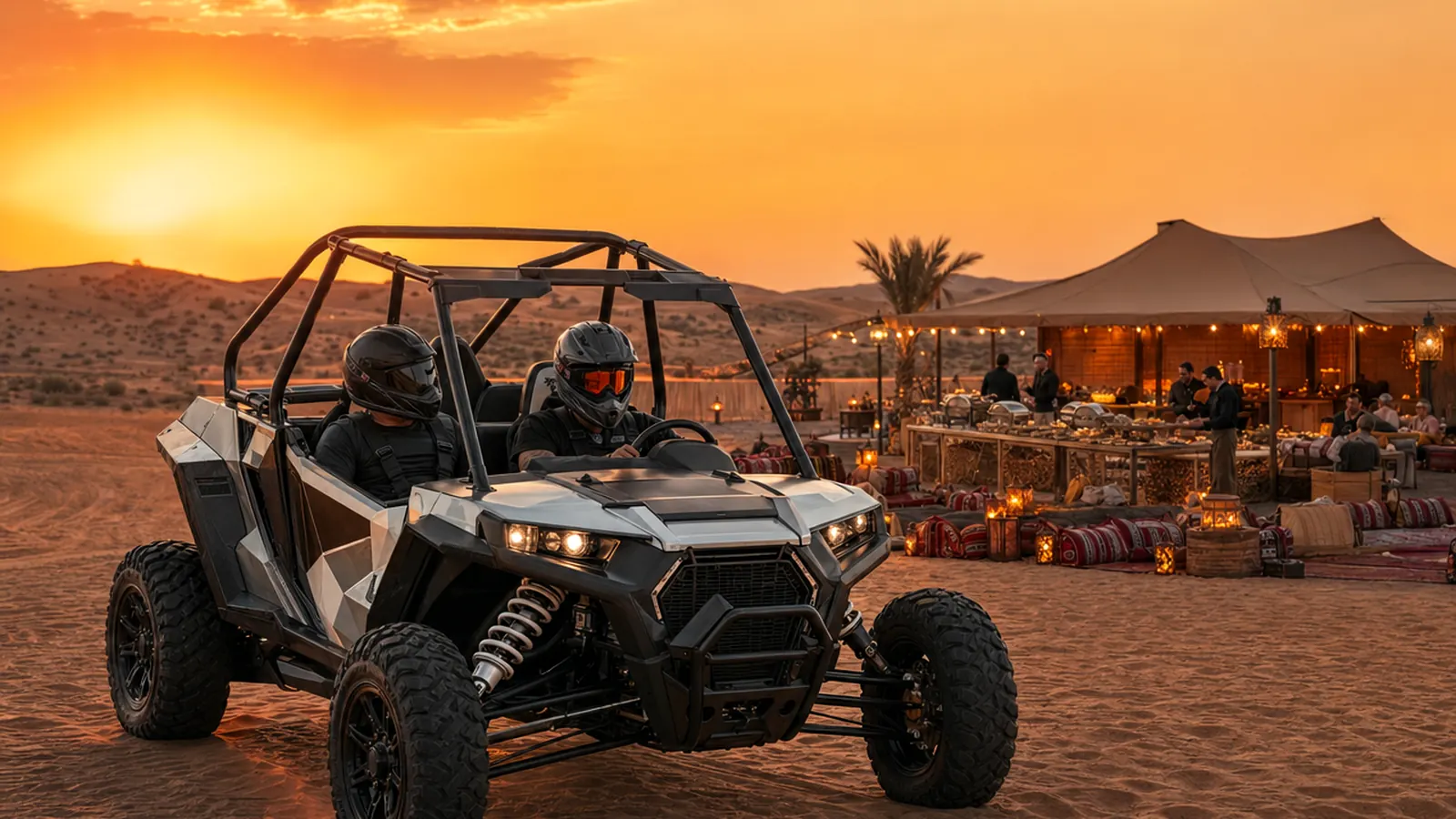
Electric buggies are quieter and produce no exhaust fumes, which is pleasant for the rider and better for the environment. But they have limited range. A full charge may only last an hour of hard riding. If you plan to be out for a full morning, you need to check the battery capacity and carry a spare if possible. Also, electric motors deliver instant torque, which can be fun, but they can also overheat if pushed too hard in deep sand. Look for a motor with thermal management or a cooling fin system.
Wheels and Tyres for Sand
An off-road tyre is not the same as a sand tyre. Standard off-road tyres have deep, aggressive treads that dig into the sand. That might sound good, but it actually makes the buggy sink and fight for traction. For desert dunes, you want wide, paddle-like tyres. These have a smooth centre with raised, angled paddles that push the sand backwards and keep the buggy floating on top. The tyre pressure is also important. Lower pressure (around 8-12 psi) gives a bigger footprint and better flotation. Some buggies come with a tyre pressure monitoring system, but even a simple pressure gauge lets you check before you ride.
Check the wheel rims too. Aluminium rims are lighter and resist corrosion from sand and salt better than steel. They also reduce the unsprung weight, which helps the suspension work more effectively. If you see rust on the rims or cracks in the rubber, that buggy has seen hard use and may not be reliable.
Safety Gear: Harness, Helmet, and Goggles
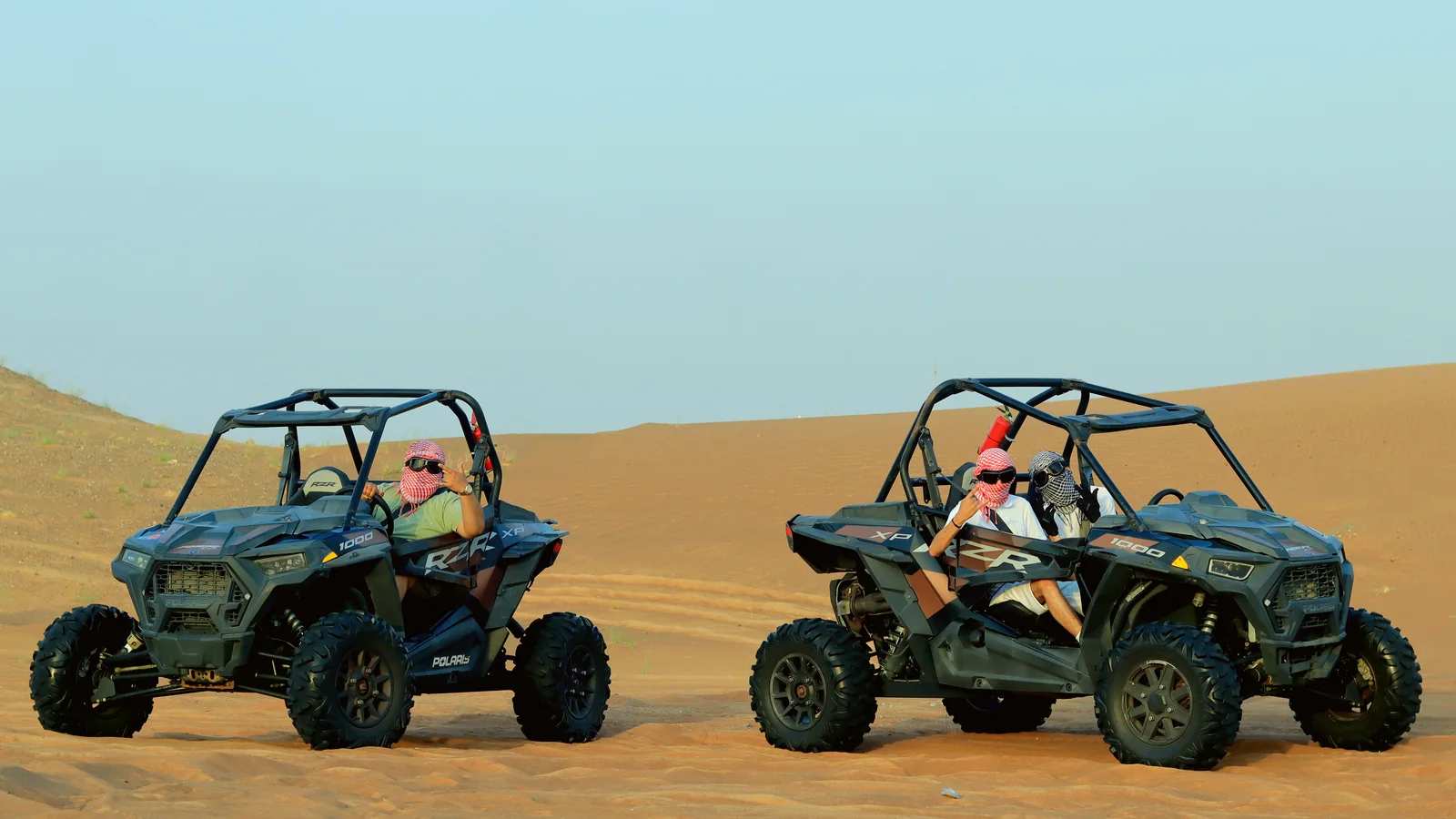
A safety harness is not just a strap to hold you in. In a dune buggy, you can be thrown forward, sideways, or even upward as the buggy crests a dune. A standard lap belt is not enough. Look for a four-point or five-point harness. These keep you firmly in the seat and spread the force of a sudden stop across your chest and hips. The straps should be wide, padded, and easy to adjust. Check the buckle for a quick-release mechanism that you can operate with one hand.
A helmet is mandatory. It protects your head from impact if the buggy flips or if you hit a hidden rock. Full-face helmets are best because they also protect your jaw and face from flying sand. A good helmet will have a visor that seals out the dust. Without it, you will be blinking sand out of your eyes within minutes. Goggles are an alternative, but they need to fit snugly over the helmet strap. Look for anti-fog lenses and a wide field of view. Cheap goggles can mist up and make it dangerous to see where you are going.
Seating and Controls
Comfort matters when you are bouncing over dunes for an hour or more. The seat should have high side bolsters to keep you in place during sharp turns. The padding should be firm but not hard. Foam that is too soft will compress quickly and leave you sitting on the frame. Check that the seat is securely bolted, not just clipped in. Adjustable pedals and a tilt-adjustable steering wheel are nice touches. They allow different-sized riders to find a comfortable position without straining their legs or arms.
The controls should be within easy reach. The gear shifter, if the buggy has one, should have a short throw and a positive click. A sloppy shifter can lead to missed gears and sudden loss of power on a climb. For automatic buggies, the throttle response should be smooth, not jerky. A jerky throttle makes it hard to maintain a steady speed on loose sand.
Single-Seater vs Multi-Seater
A single-seater buggy is built for pure performance. It is lighter, more agile, and can tackle steeper dunes because it has less weight to haul. If you are riding alone and want the most thrilling experience, a single-seater is hard to beat. But it leaves no room for a passenger. A two-seater or four-seater buggy shares the fun and allows you to bring a friend. However, the extra weight changes the handling. It will be slower to accelerate and may need more power to climb the same dunes. Decide based on who will ride with you. If you are always going solo, a single-seater makes sense. If you want to share the experience, go for a multi-seater with a strong engine.
Guided Tour vs Self-Guided Ride
Many visitors to Dubai choose a guided tour. A guided tour means you follow a lead buggy that knows the terrain. This is useful because the desert can be disorienting. Dunes look similar from every angle, and it is easy to get lost. A guide also takes you to the best spots, like high dunes with panoramic views or long stretches of flat sand for speed. For a guided tour, you do not need to worry about navigation or recovery equipment. The guide carries radios, a GPS, and sometimes a tow rope. If you prefer to explore on your own, you need a buggy that is self-reliant. That means carrying a spare tyre, a basic tool kit, and plenty of water. You also need to know how to read the sand. Wet sand is firm; dry sand is soft. Avoid driving on the slip face of a dune, which is the steep, soft side where the sand is loose and the buggy can roll.
Checking the Buggy Before You Ride
Before you set out, do a quick walk-around. Check the tyre pressure and look for cuts or bulges in the rubber. Check the harness straps for fraying. Make sure the helmet visor is not scratched. Look underneath the buggy for any leaking fluids. A small oil drip can become a big problem on a long ride. Test the brakes. They should feel firm, not spongy. If the buggy has a roll cage, check that the padding is intact. The roll cage is your last line of defence in a rollover. Any damage to it means the buggy should not be used until repaired.
Where to Find Reliable Information
When you are ready to book or buy, it helps to consult a trusted source. The Buggy Ride Dubai official site provides details on the types of buggies they use and the safety standards they follow. Reading through their information can give you a benchmark for what a well-maintained buggy looks like. You can compare their specifications with what you see elsewhere. The Buggy Ride Dubai official site is a good starting point to understand what is available and what to expect from a professional operator. Always verify the condition of the buggy yourself, but use their listings as a reference for the features that matter.
Final Checklist Before You Go
Before you head out into the dunes, confirm these points: the buggy has a strong chassis, good suspension, and a cool-running engine. The tyres are sand-specific and properly inflated. The harness, helmet, and goggles are in good condition and fit you well. The controls are smooth, and the seat is comfortable. Whether you choose a single-seater or a multi-seater, make sure it matches the experience you want. If you are new to the desert, a guided tour is a safe and enjoyable way to start. If you are experienced, a self-guided ride can be more adventurous. The right buggy makes the difference between a day you remember with a smile and one you remember with a sore back. Take your time, ask questions, and test the buggy before you commit.